
As a modern day business owner, whether you like it or not, your go to market strategy will almost certainly involve being highly active on social media. If you’re more of a deep thinker and problem solver, like I am, being on social media can feel quite uncomfortable.
Social media requires that you be highly visible, promotional, and able to squeeze all your depth into a single post. But there’s good reason to do it.
LinkedIn helps people get to know you, understand how you think, and see how you solve problems. It can bring the right people to you and make selling feel like a natural step in a process rather than a high pressure event.
Six Months in, and a Crash Course
For the last six months, I’ve been taking part in a LinkedIn marketing challenge. My initial goal was simple: turn one high-stakes prospect, someone very well known on LinkedIn, into a client. What I didn’t expect was signing myself up for a crash course in social media marketing, copywriting, hooks, going viral, branding, and everyone’s favourite: the art of the DM.
Along the way, I have accumulated advice on what works and what doesn’t. There were algorithm hackers around every corner. But the truth is, nobody outside of LinkedIn really knows exactly how the platform works. They can use pattern recognition to glean insights about what gets traction, but when the algorithm refreshes, which it inevitably does, a lot of that advice becomes irrelevant.
A few months into the challenge, I did the most useful thing I could do.
I stopped.
I took a step back and asked myself what I actually wanted out of LinkedIn, beyond sharing value and trying to impress people. This prompted me to reconnect to my brand positioning, and I started posting with three clear goals.
First, I wanted more people to know I exist, what Lumineer does, and who we help.
Lumineer helps boards, leaders approaching an exit, and multipreneurs move their businesses forward by improving morale, engagement, financing and organisational structure.
Second, I wanted the people I work with to understand what my core offer actually is.
Third, I wanted a way to move people from reading and engaging with my content to deciding to work with me.
Here’s what I learned along the way.
1. How to build awareness
First, it helps to understand what LinkedIn is for.
It exists to connect professionals and help them become more productive and successful. If your work helps people do that, it makes sense to build a presence there.
But there’s a difference between your company brand and your personal brand. Your company brand is what your business stands for. Your personal brand is what people come to know you for: your values, your skills, your personality and the perspective you bring to your work.
Think about Elon Musk. His personal brand is about being bold, visionary, urgent, and closely associated with space & technology. That connects directly to the business he builds. Gary V has a different personal brand: super high energy, outspoken, authentic, and prolific with content. That connects to how he builds his content and his audience at Vanyard media. Your personal brand needs that same connection.
A great place to start is to ask yourself: what do I want to be known for?
You can then create content around your chosen identity.
Alternatively, you can do what I did, which is to start posting and let your audience figure your brand out for you. It worked for me but I wouldn’t recommend it. People got to know me, but working out what I wanted to be known for took longer than it needed to.
Proof that it worked for me:
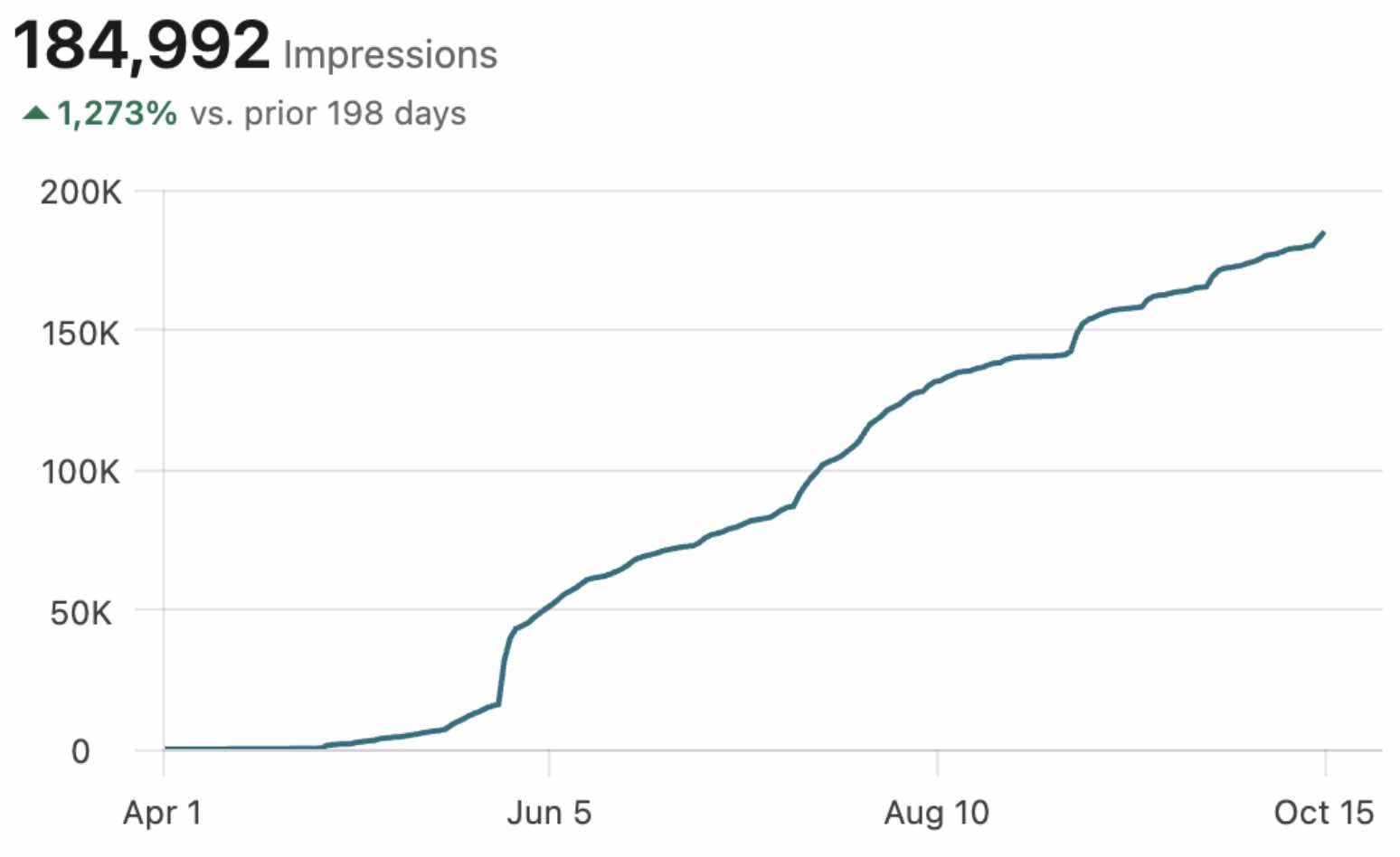
The things that helped me build awareness were sharing the messy middle of entrepreneurship, talking openly about what I’d achieved, and showing people that I have the experience to lead them through change.
I also shared educational content about turning ideas into action, business transformation, digital transformation and change, including the practical side of getting things moving that traditional consultants might not touch.
And I promoted people whose approach or company ethos aligned with my own.
2. How to foster interest
A growing follower count is a good sign of growth, but it doesn’t necessarily mean people understand what you do. The audience needs to know what you offer, what working with you would do for them, and how to find you. One of the best ways to show this is through other people. You can tell people you’re good at what you do. But when a client describes the result, that’s evidence. It’s social proof.
- Use case studies to show the before and after of working with you.
- Share client feedback.
- Highlight the people who tag you, send you on-brand messages, and who talk about the impact you’ve had.
A simple habit can help you here: For every two educational content posts, and every one personal content post, write a post that makes your offer more concrete. Show the problem, show your approach, show the outcome, and share a resource that your audience can use and that will inspire them to keep learning from you.
The aim is to help people understand not just what you know, but how you can help them.
3. How to cultivate desire and commitment
This is where all of the work pays off.
When someone messages you, or when you message them, you want it to feel like a conversation between two people who already know each other. They know me. They know what I’m working on. They’ve seen my work and my point of view.
That’s the advantage of content-led selling. Some of the initial getting-to-know-you happens before you ever speak directly. And when your follower count grows, for some reason, it does change how seriously people take you when they write to you.
From there, keep the process simple.
The first call is a discovery call. It’s about them, their business, where they are versus where they want to be (very similar to consulting).
The second call is about the offer. By then you should understand their situation well enough to make a relevant recommendation, and they’ve had time to consider whether they want you on their team.
Separating discovery from the offer means the prospect has space to explain what they need, and you have the information to recommend something that actually fits.
Executives are short on time and long on options. The fastest way to earn their attention is to show them you’ve listened before you propose anything.
The bottom line
When you first start on LinkedIn, it’s about getting attention.
When that subsides and you’ve gotten your reps in, you start to understand that it’s about helping the right people to understand you, to trust your work, and to see a good reason to work with you.
Aneta Kosinska is a Polish – Canadian, MSc + CEMS MIM alumni. With management consulting, analytics and startup/entrepreneurial experience, she aspires to contribute to the knowledge sharing economy.
Image: DALL-E
🔴 Found these ideas useful?
Sharpen your edge in consulting